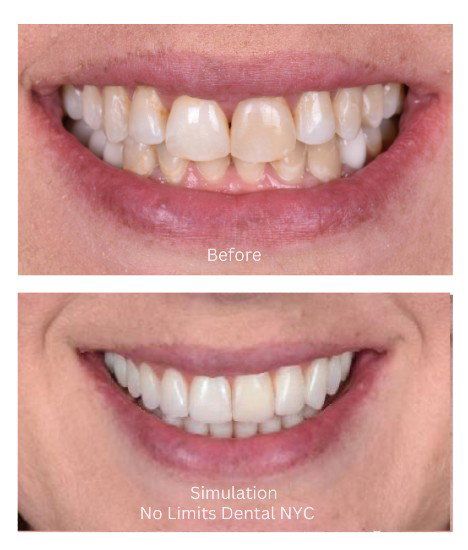
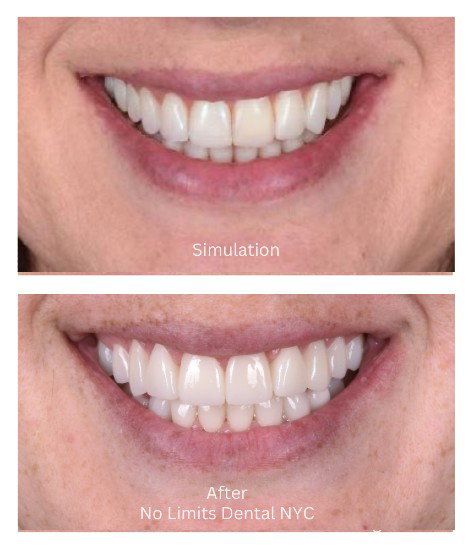
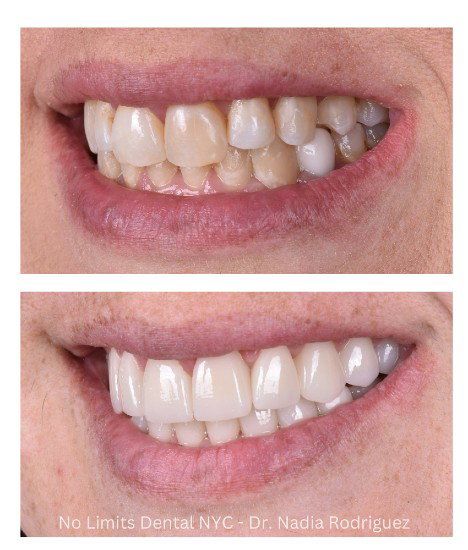
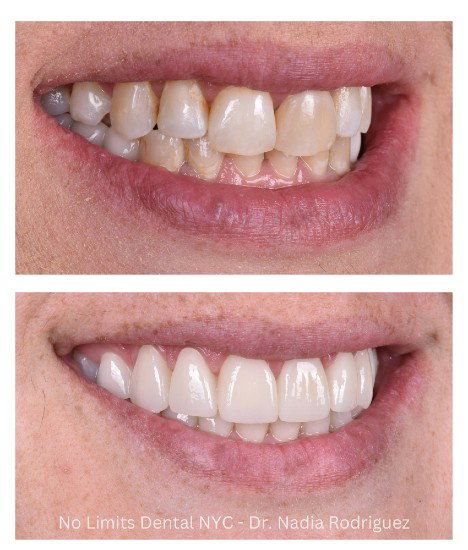
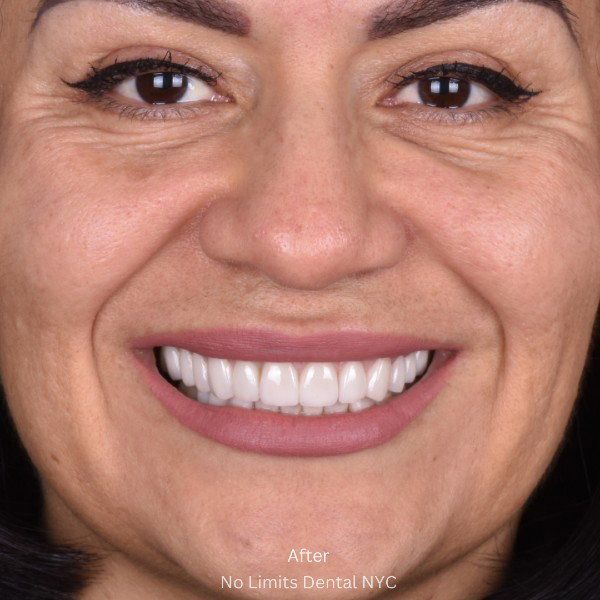
Discover how patients across New York City found clarity, confidence, and long-term dental solutions at No Limits Dental. Personalized care, comprehensive planning, and results they can trust.
Restoring Strength After Years of Service: A Retired Detective's Smile Transformation
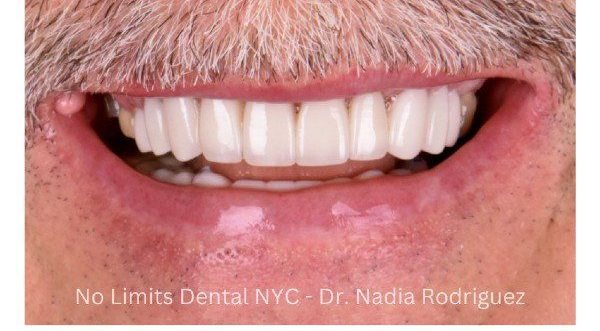
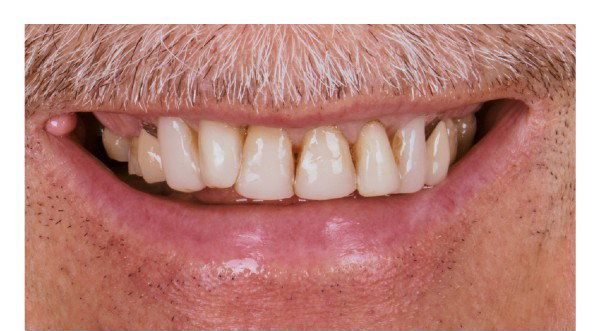
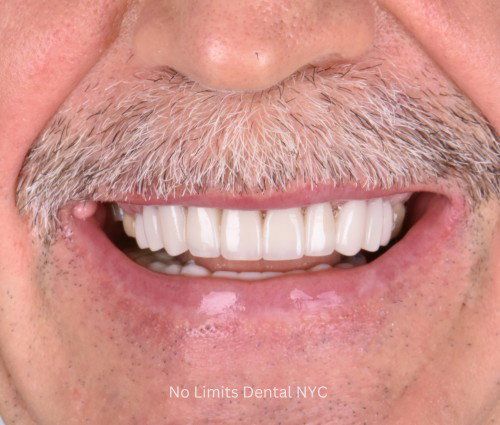
BeforeAfter
They say your teeth tell the story of your health, and sometimes, your life.
Stress often shows up as grinding. Acid reflux can erode enamel. Medications, chronic stress, and hormonal changes can affect salivary flow and lead to cavities. Your teeth reflect the toll that life has taken on your body.
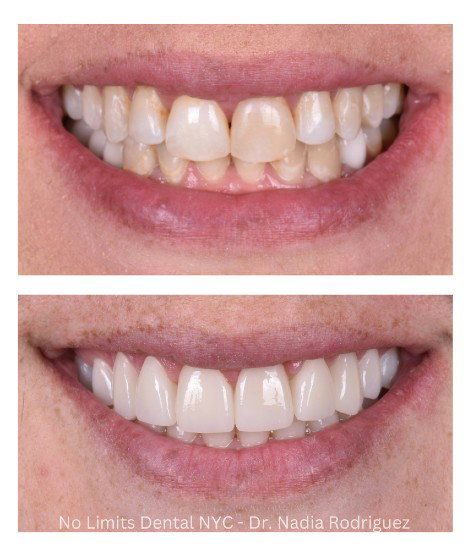
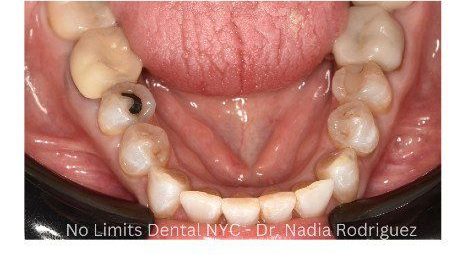
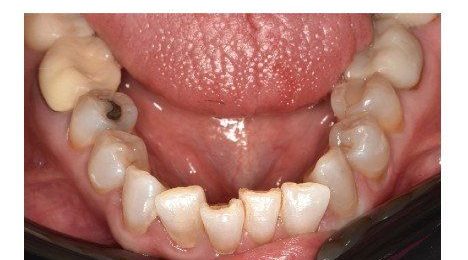
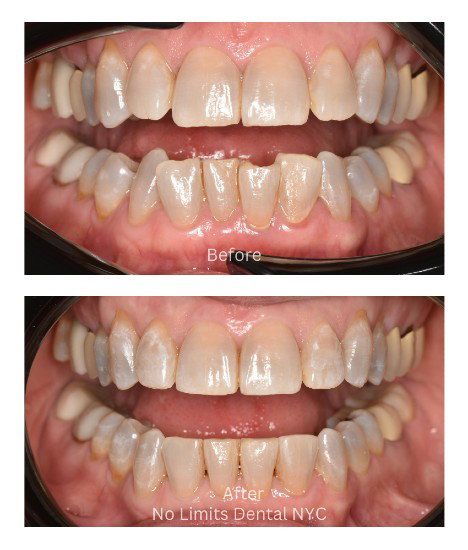
For this patient, a retired NYPD detective, the evidence was clear. After decades of high-stress situations—the kind that makes most of us hold our breath—his teeth showed severe grinding and significant loss of tooth structure.
Addressing the Problem, Not Just the Symptoms
When we first met, I addressed his most urgent issues with composite fillings. They helped temporarily, but they weren't a long-term solution. Within a year, the fillings chipped and discolored.
I explained that to truly restore his chewing function and give him a smile that would last, we needed to rebuild his lost enamel with porcelain crowns. He understood the reasoning, but due to financial considerations, he wanted to phase the treatment in stages.
About a year later, he returned, and we got started.
A Phased and Thoughtful Approach
We placed temporary crowns on his upper and lower teeth that resembled the shape and appearance of what his final porcelain crowns would look like. This gave him a preview of his new smile and allowed him to get comfortable with the changes.
First, we replaced his upper temporaries with permanent porcelain crowns. A year later, we completed the lower arch.
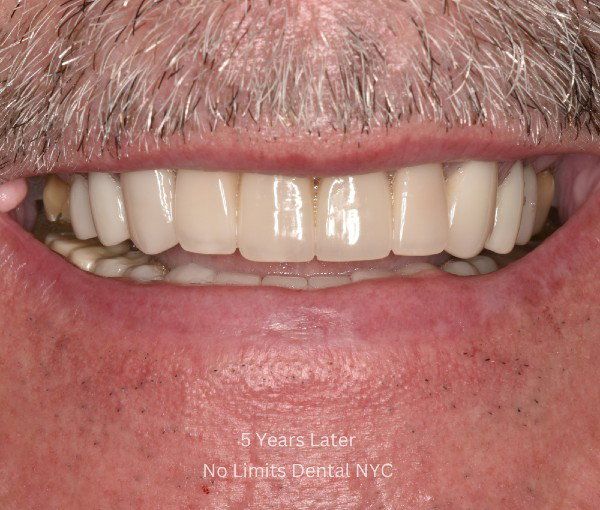
5-Years Later: The Results That Last
It's now been five years since his crowns were placed, and I recently asked him what he feels is the greatest benefit from getting this work done.
His answer? He feels more secure when he chews because his bite feels better. And he loves the compliments he gets when people meet him.
But what amazes him most is when other dentists compliment his dental work. It reassures him that he made the right choice—and that the investment in his health was worth it.
It was an honor to help restore his smile after so many years of service. He spent his career protecting others—it was time to take care of himself.
A Young Actress Gets Her Confident, Camera-Ready Smile
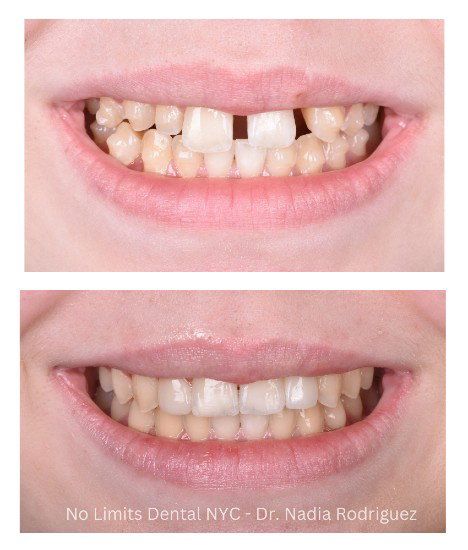
When 12-year-old Emma* came to our Midtown office with her mother, she had a clear goal: she wanted a more mature, symmetrical smile so she could audition for older roles.
As a working actress, Emma had spent years playing younger characters—roles where gaps between her teeth were perfectly fine, even charming. But as she grew, so did her ambitions. She wanted to play adolescent characters, and that meant her smile needed to reflect her age. She wanted whiter, straighter, more even-looking teeth, and she wanted to replace her missing top lateral tooth.
Her mother wanted to understand all of her options—and she wanted to make sure we chose the right approach for someone so young.
Listening First, Planning Second
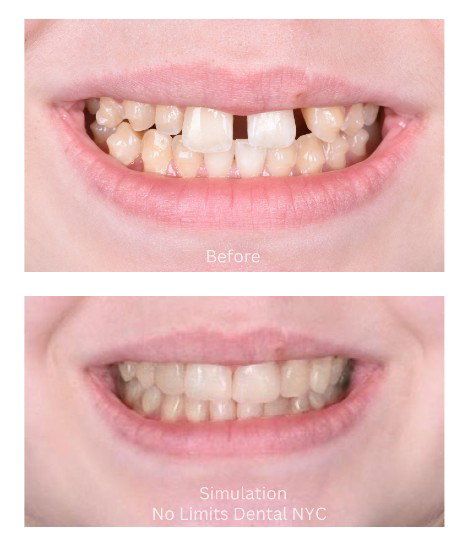
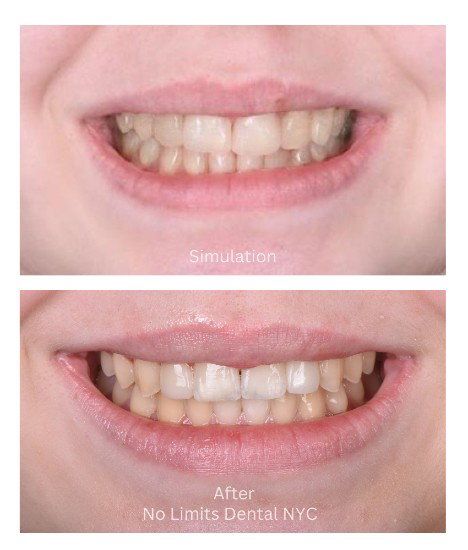
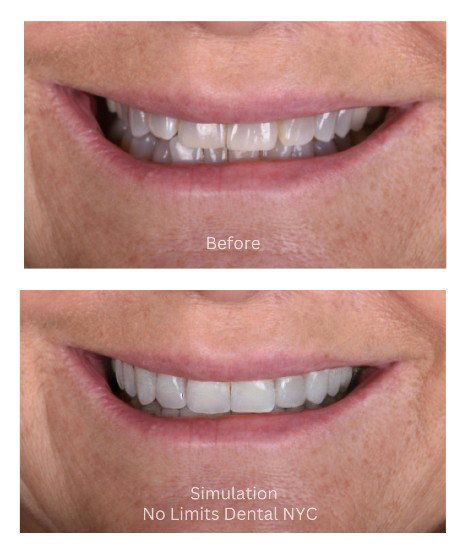
I started our appointment by listening to Emma. I wanted to understand exactly what she was hoping for, so I could create a plan that matched her expectations. After taking detailed photos and studying her case, I created a digital smile simulation that reflected what she was asking for.
Then we sat down together—Emma, her mother, and me—to discuss her options: veneers, a dental implant, or a bridge.
But here's what I kept coming back to: Emma is 12. She's still growing. Her face is changing. And while she has strong feelings about her smile right now, those feelings might shift as she gets older. Dental restorations also change over time depending on their environment. So my goal was to give her a beautiful, symmetrical smile while being as conservative as possible—both in terms of the dental work itself and the time she'd spend in the chair.
Let's be honest: asking a 12-year-old to sit through long, complicated procedures isn't realistic. I wanted to give her the smile she wanted in the least amount of time, with the least invasive approach.
A Coordinated, Conservative Plan
After reviewing the simulation and discussing her options, Emma decided to start with Invisalign through an orthodontist. I coordinated closely with the orthodontist to make sure we created the right amount of space for her teeth.
Once her Invisalign treatment was complete, I did some cosmetic refinements to her enamel to fine-tune her tooth shape and alignment. Then we placed one porcelain veneer and one porcelain Maryland bridge.
A Maryland bridge is a conservative option that attaches to the back of the adjacent teeth—it doesn't require crowns or caps on her healthy teeth like a traditional bridge does. No anesthesia was needed, and it only took two one-hour appointments to complete her new smile.
The Results: Confidence On and Off Camera
Both Emma and her mother were thrilled with the results. Emma is now auditioning for the mature roles she always wanted, and she feels more confident than ever—not just on camera, but among her middle school peers.
It was a pleasure to work with such a thoughtful, motivated young patient and to help her step into this next chapter with a smile that reflects who she's becoming.
When Waiting Feels Safer Than Deciding: A Smile Restored After Years of Uncertainty
When Maria* came to our office, she'd been stuck in a frustrating cycle for years.
She'd seen several dentists for checkups and cleanings, and they all told her the same thing: she needed Invisalign to correct her crowding and bite. But while she focused on whether or not to straighten her teeth, a bigger problem was quietly getting worse. She had large cavities that were too advanced for fillings—they needed crowns. And because of insurance limitations and the fear of making the wrong choice, she kept waiting.
She wanted to be 100% sure before committing to anything. But that uncertainty was taking a toll. Years passed, and the decay deepened.
Creating a Plan She Could Trust
When we met, I told Maria I'd create a comprehensive plan that addressed everything—not just one piece of the puzzle. We took detailed photos, and I built a presentation that mapped out what I hoped to achieve, how long it would take, what would happen at each visit, and what it would cost.
Then I showed her the digital smile simulation.
I'll never forget the look on her face—wide-eyed, hopeful, but skeptical. She loved what she saw, but she wondered: could that really be me?
Even with a clear plan in front of her, it still took Maria about a year to move forward. I encouraged her not to wait—her decay was progressing, and I worried she might need additional root canals or even lose a tooth, which would complicate treatment. But I understood. Big decisions take time, especially when you've been uncertain for so long.
Bringing Her Smile to Life
Thankfully, her treatment didn't deviate much from the original plan. Because her gumline was visible when she smiled, I brought in a periodontist to create a beautiful, balanced frame for her new teeth. After that, we prepared her teeth for crowns and placed temporary restorations that resembled her future smile.
Three weeks later, we placed her final porcelain crowns
Maria told me afterward that the confidence she feels now can't be described in words. She no longer questions how she looks. She gets compliments from friends and family all the time. And after so many years of hesitation, she can finally focus her attention on other, more important parts of her life.
It was such a pleasure to complete her smile makeover—especially knowing how long it took her to get here.
When a "Small" Change Makes All the Difference
BeforeAfter
Sometimes what seems like a subtle change to the outside world means everything to the person in the mirror.
This patient came to our office feeling self-conscious about her lower teeth. She was looking for a new dentist, and a friend recommended Dr. Rodriguez—knowing she could address both functional and aesthetic concerns.
As we age, our upper lip naturally covers more of our upper teeth, while our lower lip reveals more of our lower teeth. For this patient, that meant she was hyper-aware of the chips and crowding she saw on her bottom teeth. She wanted to know: could anything be done?
Exploring What "Better" Could Look Like
When I asked her what she wanted, she gave me the answer I hear often: whiter, straighter teeth—but natural-looking, so it didn't look like she'd had any work done.
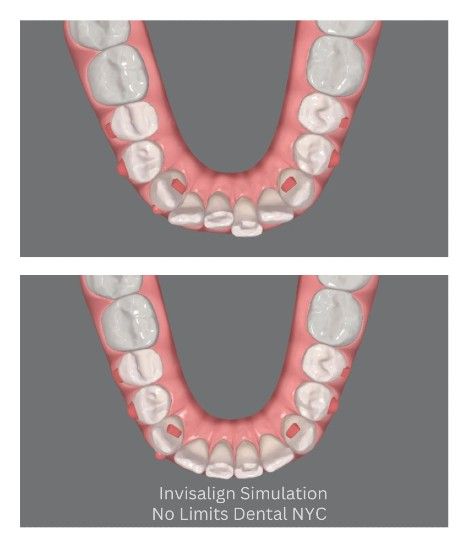
I took a series of photos and created two smile simulations. One showed what a full smile makeover would look like. The other showed what her teeth would look like if we only completed Invisalign.
After reviewing both options, she decided she didn't want a full transformation. What she really wanted was to fix the chipping on her lower teeth—the thing that bothered her most.
Understanding the Root Cause
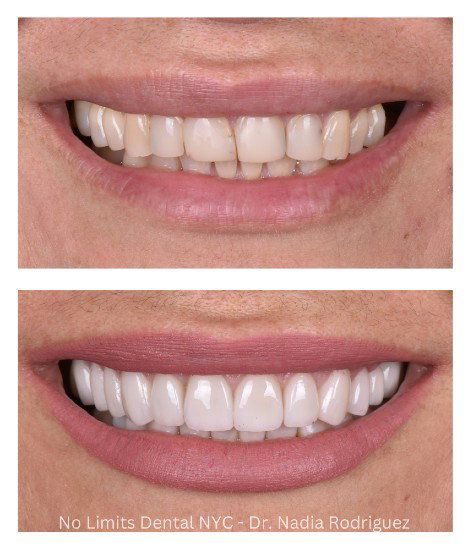
Here's what I explained: another dentist had placed a filling on one of her lower teeth, but it fell off within a few days. That's because the chip wasn't just a cosmetic issue—it was a functional one. The crowding and misalignment of her lower teeth meant they were now crashing into her upper teeth. Her lower teeth, being weaker, kept chipping.
To fix the problem long-term, we needed to correct the position of her teeth first. Then we could rebuild the lost enamel with white fillings or porcelain—and it would actually stay.
She took a leap of faith and completed Invisalign at No Limits Dental.
A Conservative Lasting Solution
After four months of treatment, her teeth moved into their proper positions. We did some cosmetic enamel recontouring and rebuilt her missing enamel with composite filling material. Then I added a fixed retainer—a thin metal wire bonded to the back of her lower front teeth—to keep them from shifting.
Why the extra step? Because life happens. Even the most diligent patients miss a day here and there with their retainers. I didn't want her teeth to shift back during those moments. I wanted her to enjoy her smile confidently for many years to come.
The Results: Exactly What She Wanted
Her reaction when she saw her new smile was priceless. It looked beautiful, natural, and refined—exactly what she'd hoped for.
Now she can smile confidently, without hesitation or second-guessing.
From Uncertainty to Confidence: A Natural Smile Transformation
When Sarah* first came to our Midtown Manhattan office, she'd already consulted with a few dentists about improving her smile—but she still wasn't happy with how her teeth looked.
Her concerns went beyond cosmetics, though. She could see dark spots on her teeth and wanted to know: were they just stains, or something more serious like cavities? As someone who preferred naturopathic approaches whenever possible, she wanted a beautiful, natural-looking result with the least invasive treatment possible.
Understanding What Was Really Happening
After her initial exam, x-rays, and cleaning, I invited Sarah back so we could take detailed photos of her face and smile. This step is crucial—it allows me to study proportions, symmetry, and function before we make any decisions together.
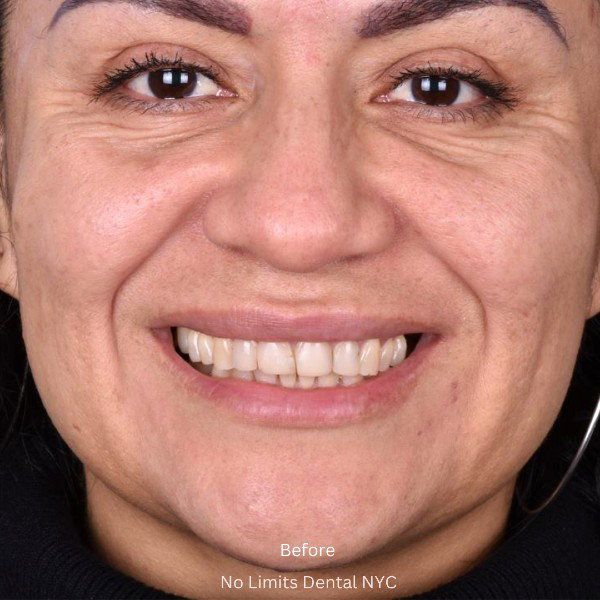
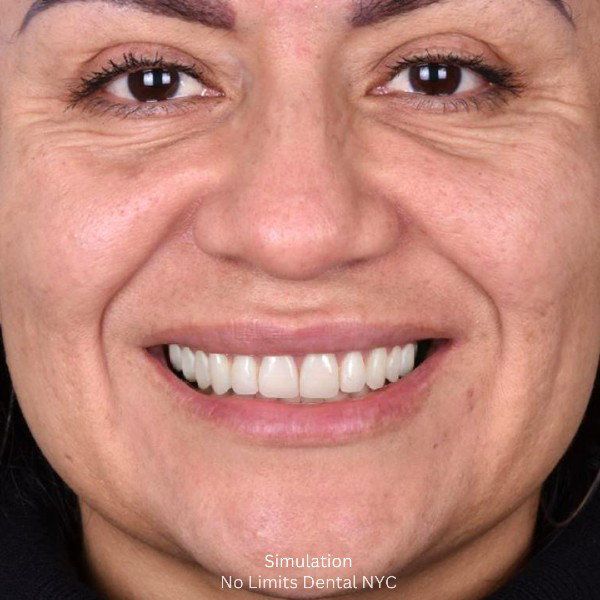
Once I created her digital smile simulation, she could see exactly what I hoped to achieve: a balanced, symmetrical smile that looked natural and would last for years. She loved it.
But here's what the simulation also revealed: those dark spots weren't stains. They were cavities that had compromised the strength of her teeth. She was also a heavy grinder, which meant she'd worn down significant enamel on her back molars. Over time, this created a collapsed bite—making her teeth shorter than they originally were.
Creating a Conservative Personalized Plan
In the spirit of being as conservative as possible, I explained that we'd use porcelain veneers wherever we could. Veneers require less tooth structure removal than crowns, which aligned with her values. However, where the cavities had weakened the teeth too much, we'd need full-coverage crowns to restore their original strength, function, and beauty.
Sarah also had a crooked lower premolar that hadn't responded to clear aligners or traditional braces. Instead of forcing movement that wasn't happening, I recommended correcting the position with a porcelain crown—a solution that gave her the alignment she wanted while maintaining stability.
The Result: A Smile That Lasts
This was an investment in time, effort, and money—but Sarah was thrilled with the result. Two years later, her smile looks just as gorgeous as the day she left our office. It's strong, natural, and effortless.
If you've been to other dentists and still feel uncertain about your smile, let's talk. We'll take the time to understand what's happening, show you what's possible, and create a plan that feels right for you.
*All photos and stories are of actual patients. Patient names changed for confidentiality
Midtown Manhattan, steps from Central Park and Columbus Circle
A short walk from the Upper West Side and Hell's Kitchen.