
They say your teeth tell the story of your health, and sometimes, your life.
Stress often shows up as grinding. Acid reflux can erode enamel. Medications, chronic stress, and hormonal changes can affect salivary flow and lead to cavities. Your teeth reflect the toll that life has taken on your body.
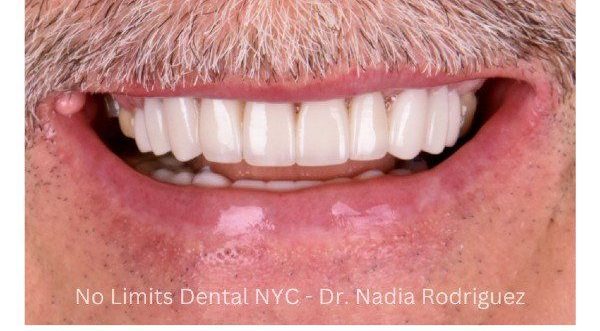
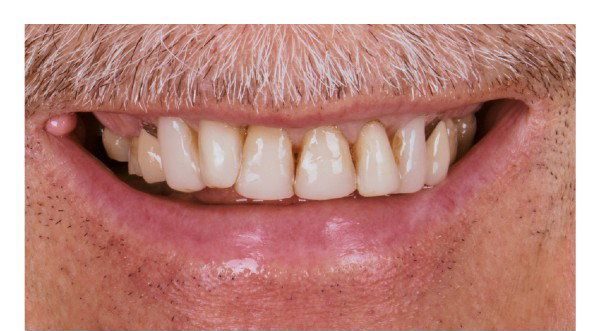
For this patient, a retired NYPD detective, the evidence was clear. After decades of high-stress situations—the kind that makes most of us hold our breath—his teeth showed severe grinding and significant loss of tooth structure.
Addressing the Problem, Not Just the Symptoms
When we first met, I addressed his most urgent issues with composite fillings. They helped temporarily, but they weren't a long-term solution. Within a year, the fillings chipped and discolored.
I explained that to truly restore his chewing function and give him a smile that would last, we needed to rebuild his lost enamel with porcelain crowns. He understood the reasoning, but due to financial considerations, he wanted to phase the treatment in stages.
About a year later, he returned, and we got started.
A Phased and Thoughtful Approach
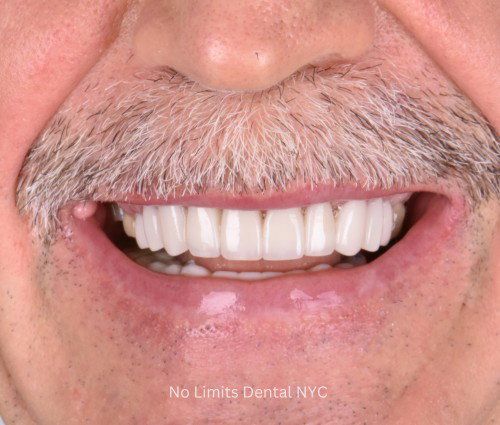
We placed temporary crowns on his upper and lower teeth that resembled the shape and appearance of what his final porcelain crowns would look like. This gave him a preview of his new smile and allowed him to get comfortable with the changes.
First, we replaced his upper temporaries with permanent porcelain crowns. A year later, we completed the lower arch.
His Treatment, Visit by Visit
Phase 1: Upper teeth
- Planning. I took impressions and photos to plan his case. (Today I use a digital scan instead of impressions.)
- Preparing his teeth. I removed all cavities and restored his teeth with temporary crowns. On his lower teeth I placed long-term temporaries, because he needed some extra time to save for his permanent lower crowns.
- Permanent upper crowns, about 2 weeks later. I removed the temporaries from his upper teeth and placed his permanent crowns. I left his lower temporaries in place and scanned his upper teeth for a night guard.
- Night guard. I gave him his upper night guard.
Phase 2: Lower teeth, about a year later
- Preparing his lower teeth.
- Permanent lower crowns, 2 weeks later. I placed the final crowns on his lower teeth.
How His Insurance Helped
Because he had cavities and broken teeth, his dental insurance covered a small portion of his crowns. His plan's annual maximum was $2,000, so that was the most it contributed each year.
Before treatment, we check your benefits and give you a clear estimate of how much your insurance will contribute. See the PPO plans we accept.
5-Years Later: The Results That Last
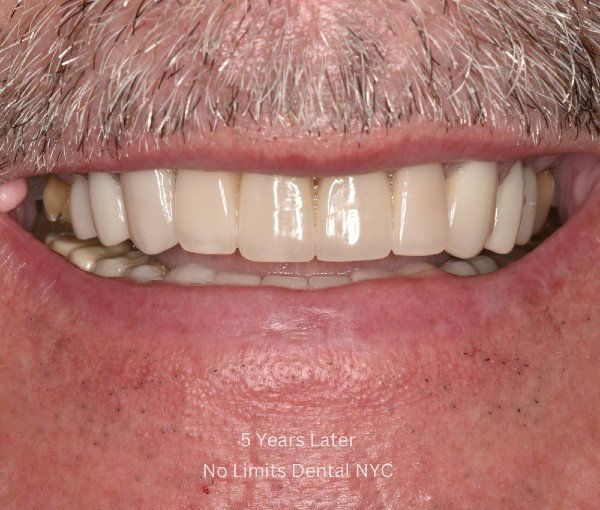
It's now been five years since his crowns were placed, and I recently asked him what he feels is the greatest benefit from getting this work done.
His answer? He feels more secure when he chews because his bite feels better. And he loves the compliments he gets when people meet him.
But what amazes him most is when other dentists compliment his dental work. It reassures him that he made the right choice—and that the investment in his health was worth it.
It was an honor to help restore his smile after so many years of service. He spent his career protecting others—it was time to take care of himself.