
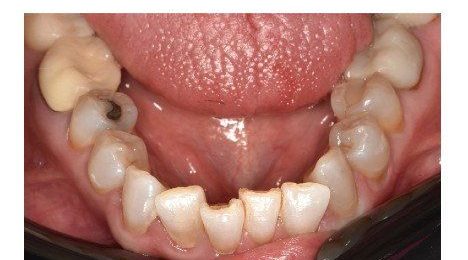
Sometimes what seems like a subtle change to the outside world means everything to the person in the mirror.
This patient came to our office feeling self-conscious about her lower teeth. She was looking for a new dentist, and a friend recommended Dr. Rodriguez—knowing she could address both functional and aesthetic concerns.
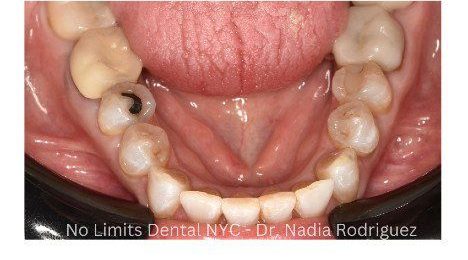
As we age, our upper lip naturally covers more of our upper teeth, while our lower lip reveals more of our lower teeth. For this patient, that meant she was hyper-aware of the chips and crowding she saw on her bottom teeth. She wanted to know: could anything be done?
Exploring What "Better" Could Look Like
When I asked her what she wanted, she gave me the answer I hear often: whiter, straighter teeth—but natural-looking, so it didn't look like she'd had any work done.
I took a series of photos and created two smile simulations. One showed what a full smile makeover would look like. The other showed what her teeth would look like if we only completed Invisalign.
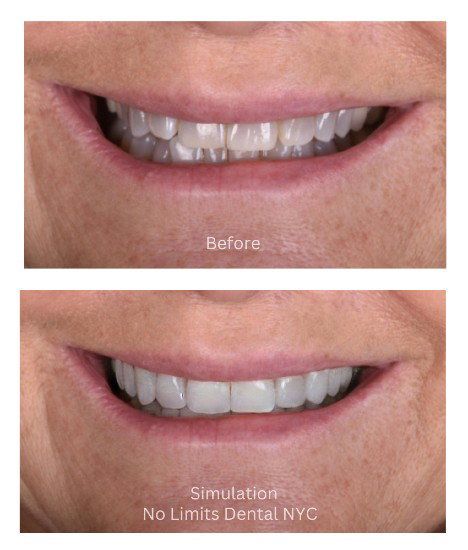
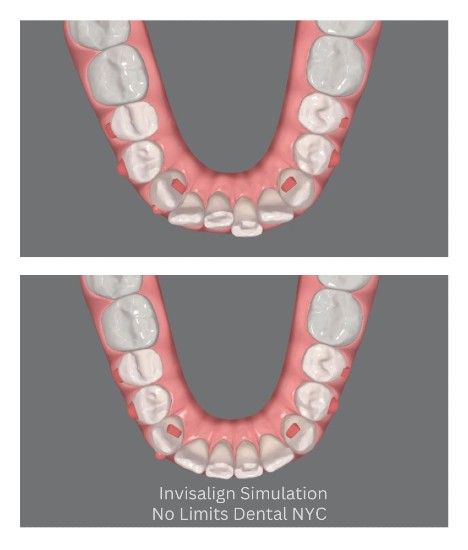
After reviewing both options, she decided she didn't want a full transformation. What she really wanted was to fix the chipping on her lower teeth—the thing that bothered her most.
Understanding the Root Cause
Here's what I explained: another dentist had placed a filling on one of her lower teeth, but it fell off within a few days. That's because the chip wasn't just a cosmetic issue—it was a functional one. The crowding and misalignment of her lower teeth meant they were now crashing into her upper teeth. Her lower teeth, being weaker, kept chipping.
To fix the problem long-term, we needed to correct the position of her teeth first. Then we could rebuild the lost enamel with white fillings or porcelain—and it would actually stay.
She took a leap of faith and completed Invisalign at No Limits Dental.
A Conservative Lasting Solution
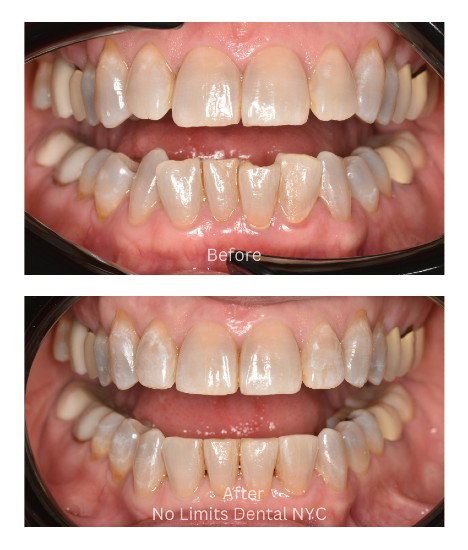
After four months of treatment, her teeth moved into their proper positions. We did some cosmetic enamel recontouring and rebuilt her missing enamel with composite filling material. Then I added a fixed retainer—a thin metal wire bonded to the back of her lower front teeth—to keep them from shifting.
Why the extra step? Because life happens. Even the most diligent patients miss a day here and there with their retainers. I didn't want her teeth to shift back during those moments. I wanted her to enjoy her smile confidently for many years to come.
Her Treatment, Visit by Visit
- Consultation. We scanned her teeth to create a model and took photos. She agreed to move forward with Invisalign because she understood that she needed to correct the position of her teeth if she wanted to properly fix her chipped tooth.
- Starting Invisalign. We inserted her Invisalign.
- A quick check. A 15-minute appointment to check how her teeth were moving with her Invisalign treatment.
- Invisalign off, bonding and recontouring. We removed the Invisalign, bonded her lower front tooth with the largest chip, and recontoured her upper and lower front four teeth a little to even out their shapes. Then we scanned her for a permanent fixed retainer for her lower teeth.
- Fixed retainer. We cemented her permanent fixed retainer, bonded from canine to canine, to keep her lower front teeth straight. The fixed retainer ensures her lower front teeth don't move if she skips a few days of wearing her removable retainer. We also rescanned her teeth to create her removable retainers, which she wears every night.
- Nightly retainers. She received her removable nightly retainers.
How Her Insurance Helped
Her insurance contributed $1,500 toward her Invisalign treatment and 80% for her bonding.
Before treatment, we check your benefits and give you a clear estimate of how much your insurance will contribute. See the PPO plans we accept.
The Results: Exactly What She Wanted
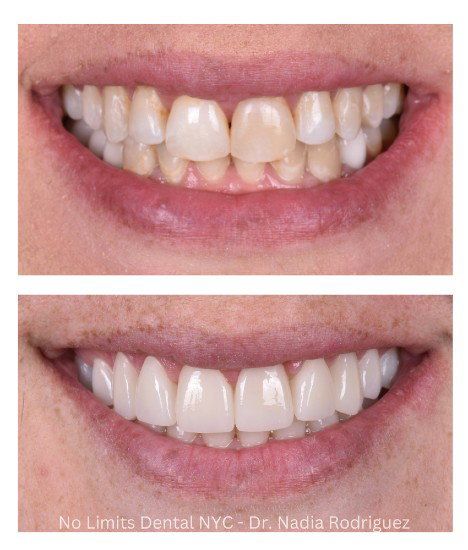
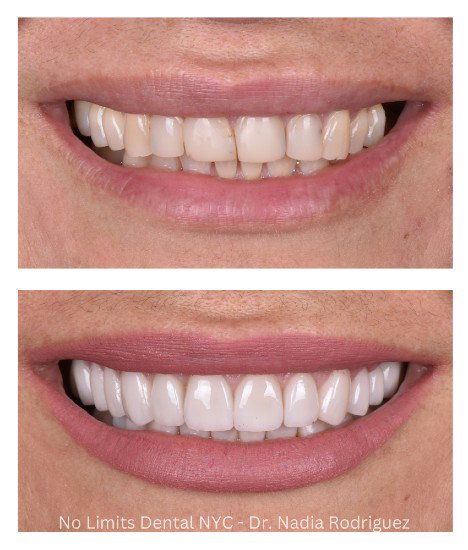
Her reaction when she saw her new smile was priceless. It looked beautiful, natural, and refined—exactly what she'd hoped for.
Now she can smile confidently, without hesitation or second-guessing.
Watch Her Story
All photos and stories are of actual patients.